
Boiler services
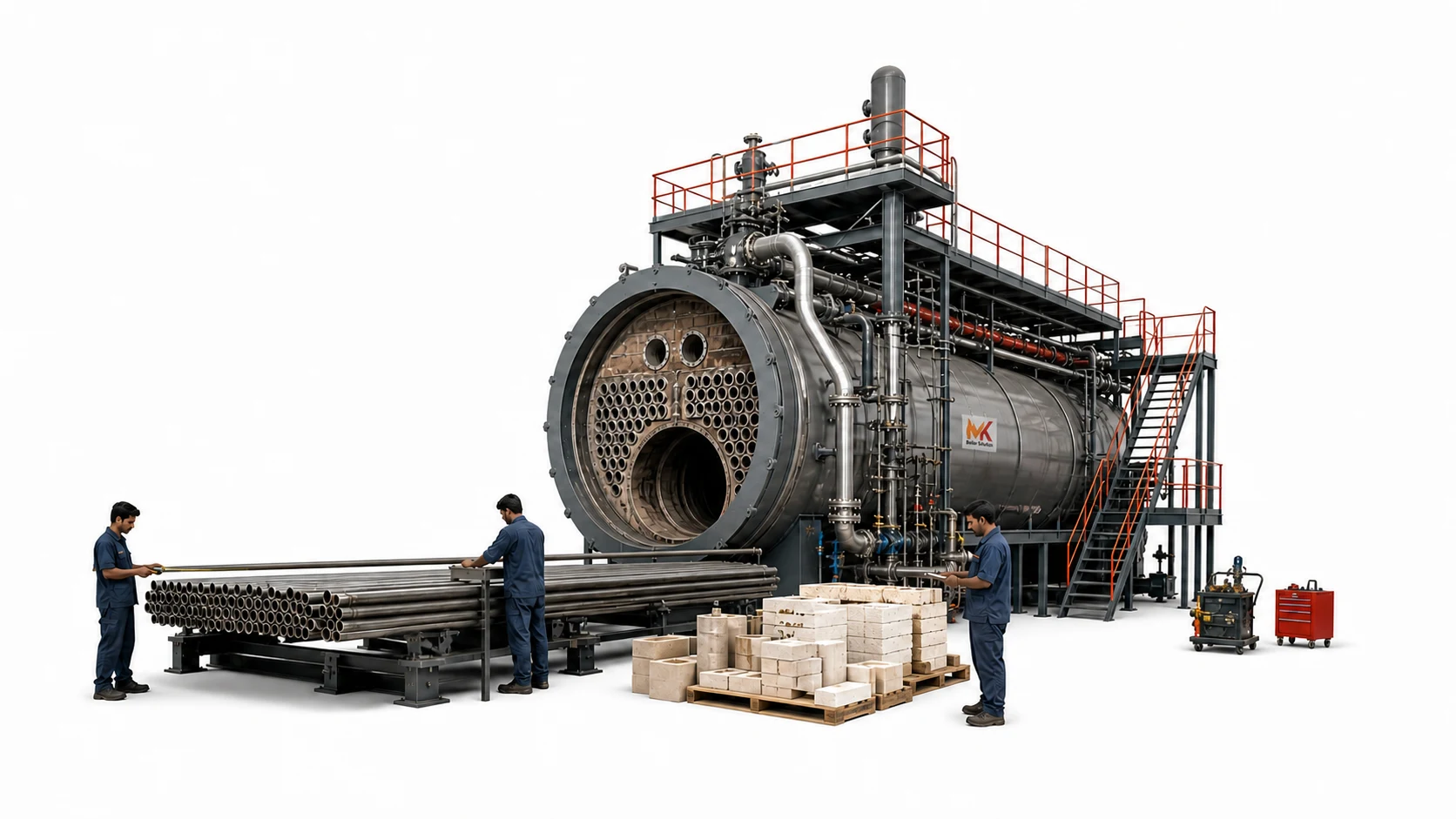
Boiler retubing and refractory repair
Define the damaged area, plan materials and access, and complete pressure-part and hot-face work inside the shutdown window.
Repair the failure and the conditions around it
A leaking or repeatedly failing tube can point to scale, corrosion, poor circulation, flame impingement, soot loading or mechanical damage. Before deciding between a local repair and a larger retube, the accessible tube field and surrounding refractory need to be assessed together.
We plan tube, gasket, refractory and insulation materials against the boiler arrangement and coordinate opening, removal, fitting, closure and post-repair checks as one shutdown package.
- Typical trigger
- Tube leak, thinning or hot-face damage
- Planning input
- Tube size, layout and condition
- Work window
- Planned or failure shutdown
Boiler services
Typical shutdown scope
- Accessible tube-field and failure-location review
- Tube measurement and material confirmation
- Individual, bank or full retubing scope development
- Tube removal, fitting and tube-end work
- Burner-quarl, door and reversal-chamber refractory repair
- Closure gaskets, insulation reinstatement and post-work checks
01 — 04
Retubing workflow
- 01
Assess
The visible failure, adjacent tubes, deposits, flame path and refractory condition are reviewed.
- 02
Measure
Tube dimensions, quantity, material requirement, access and consumables are confirmed.
- 03
Execute
Removal and replacement proceed in a controlled sequence that protects tube plates and nearby work.
- 04
Close out
The boiler is closed, inspected and prepared for the agreed post-repair test and return-to-service steps.
06Questions
Common questions
Practical answers for factory owners, utility managers and chief engineers.