
Industries
Steam systems for food and beverage processing
Deliver dependable process heat while keeping drainage, water treatment and maintenance access visible in the design.
Steam quality depends on the whole utility system
Food and beverage plants use steam across batch cooking, jackets, pasteurisers, cleaning systems and hot-water generation. The users may need different pressures and can create abrupt demand changes during start-up or sanitation cycles.
We size the steam source and review pressure reduction, trapping, condensate return and feedwater support around the actual equipment list and production schedule.
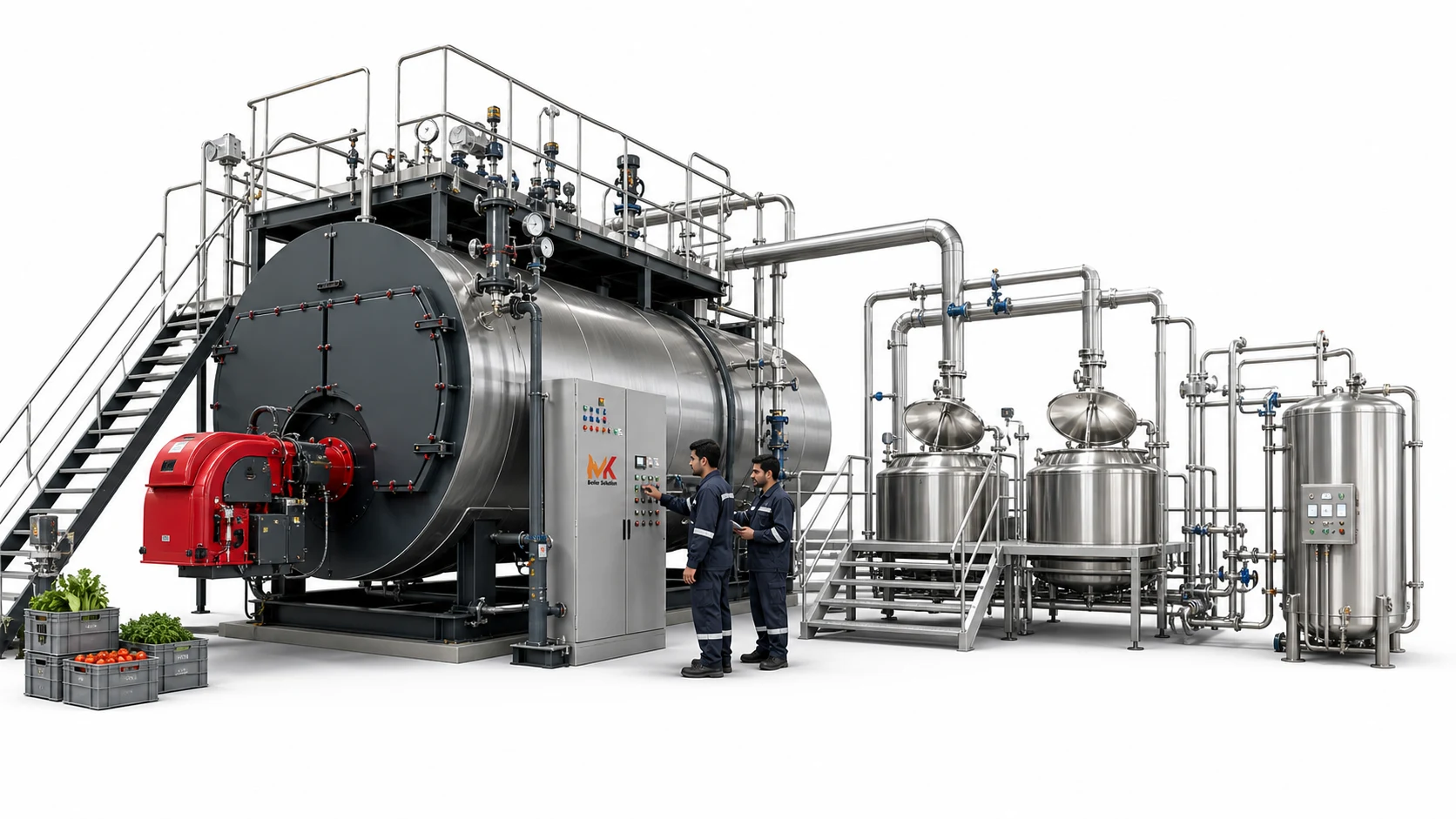
- Applications
- Cooking, heating, cleaning and pasteurising
- Design focus
- Pressure control and condensate drainage
- Lifecycle
- Installation, parts and maintenance
Industries
Plant information we review
- Process users, required pressure and batch schedule
- Direct and indirect steam-use distinction
- Pressure-reducing and isolation stations
- Steam-trap selection and condensate return
- Feedwater treatment and chemical-control interfaces
- Cleaning access and critical-spares planning
01 — 04
System planning
- 01
List users
Record each cooker, jacket, exchanger, CIP or hot-water load and when it operates.
- 02
Separate duties
Distinguish pressure levels, direct-contact requirements and simultaneous demand.
- 03
Engineer utilities
Size generation, reduction, trapping, return and feedwater interfaces as one system.
- 04
Plan uptime
Identify the controls, valves, pumps and gaskets that would otherwise stop production.
06Questions
Common questions
Practical answers for factory owners, utility managers and chief engineers.