
Industries
Steam boilers for textile, dyeing and garment factories
Size the boiler and header for simultaneous batch demand, stable pressure and the production equipment that actually uses the steam.
Textile steam demand is rarely flat
Jet dyeing, washing, compacting, stenters, dryers and finishing equipment can create sharp load changes when several machines fill or heat together. Adding connected nameplate loads alone can oversize the plant; using only an average can leave header pressure collapsing at the peak.
We review the production sequence, working pressure, condensate return, fuel availability and expansion plan before recommending the boiler, burner, feedwater and distribution arrangement.
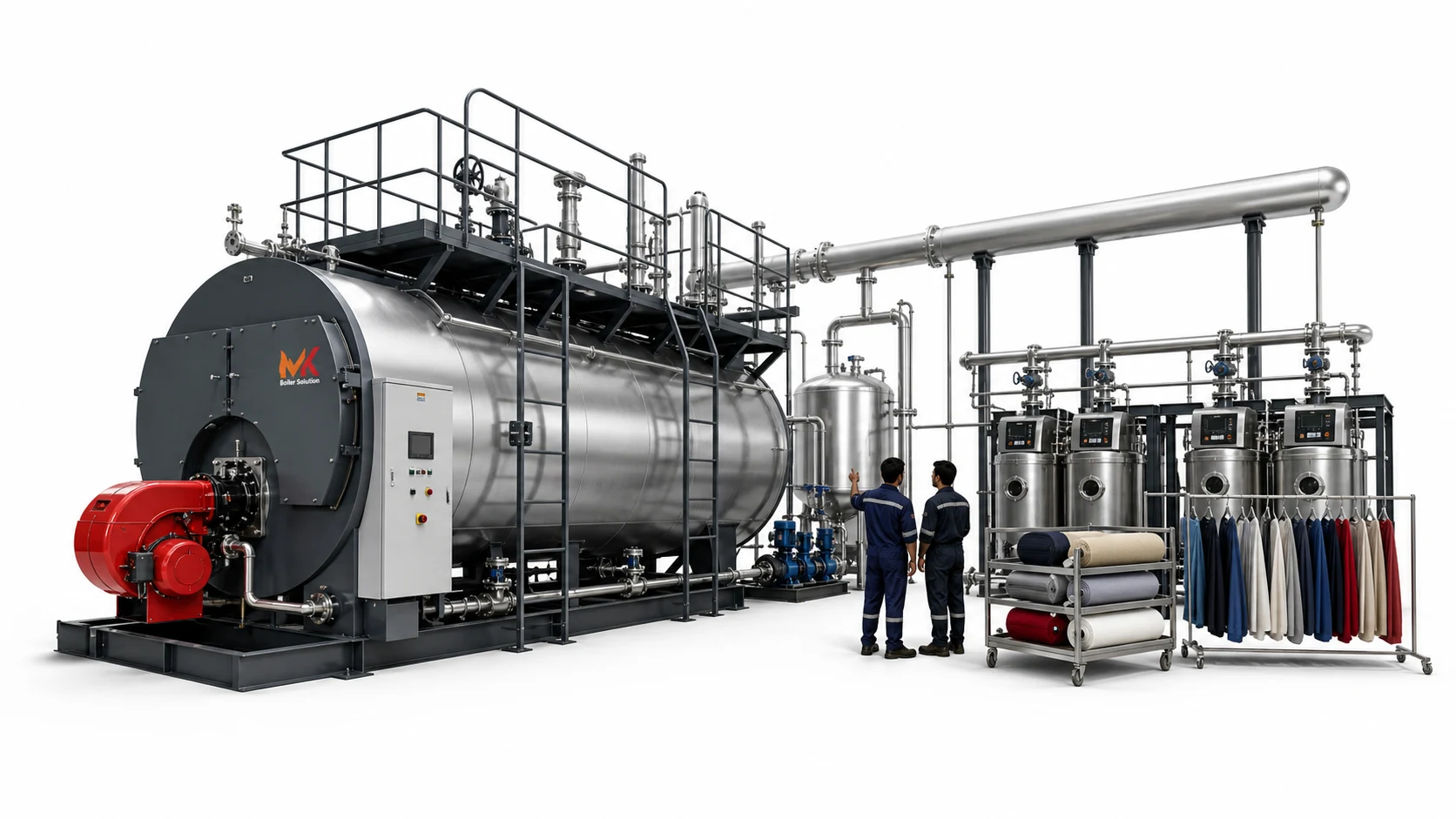
- Primary load
- Dyeing, washing and finishing
- Key design issue
- Simultaneous peak demand
- Support
- Supply, spares and breakdown response
Industries
What the steam review covers
- Machine list, batch cycle and simultaneous-use assumptions
- Required pressure at the point of use
- Main header, branch and drainage constraints
- Make-up water, condensate return and feedwater duty
- Available gas, liquid fuel or biomass conditions
- Future lines and practical turndown requirements
01 — 04
From production plan to boiler scope
- 01
Map the process
List the steam users, batch timings, pressures and planned production changes.
- 02
Build the load case
Separate normal, peak and start-up demand rather than relying on one total figure.
- 03
Select the system
Match boiler type, burner, feedwater and header arrangement to the load profile.
- 04
Support operation
Keep critical controls, valves, pumps and burner parts within a planned spares strategy.
06Questions
Common questions
Practical answers for factory owners, utility managers and chief engineers.