
Emergency retrofit
Surviving low gas pressure (1-3 PSI) in Gazipur, Savar and Narayanganj
When Titas Gas pressure drops to 1-3 PSI during the day shift, a mechanical booster pump is not the fix - it is a safety hazard and a code violation. Here are the burner and fuel retrofits that keep the boiler running without touching the pressure vessel.
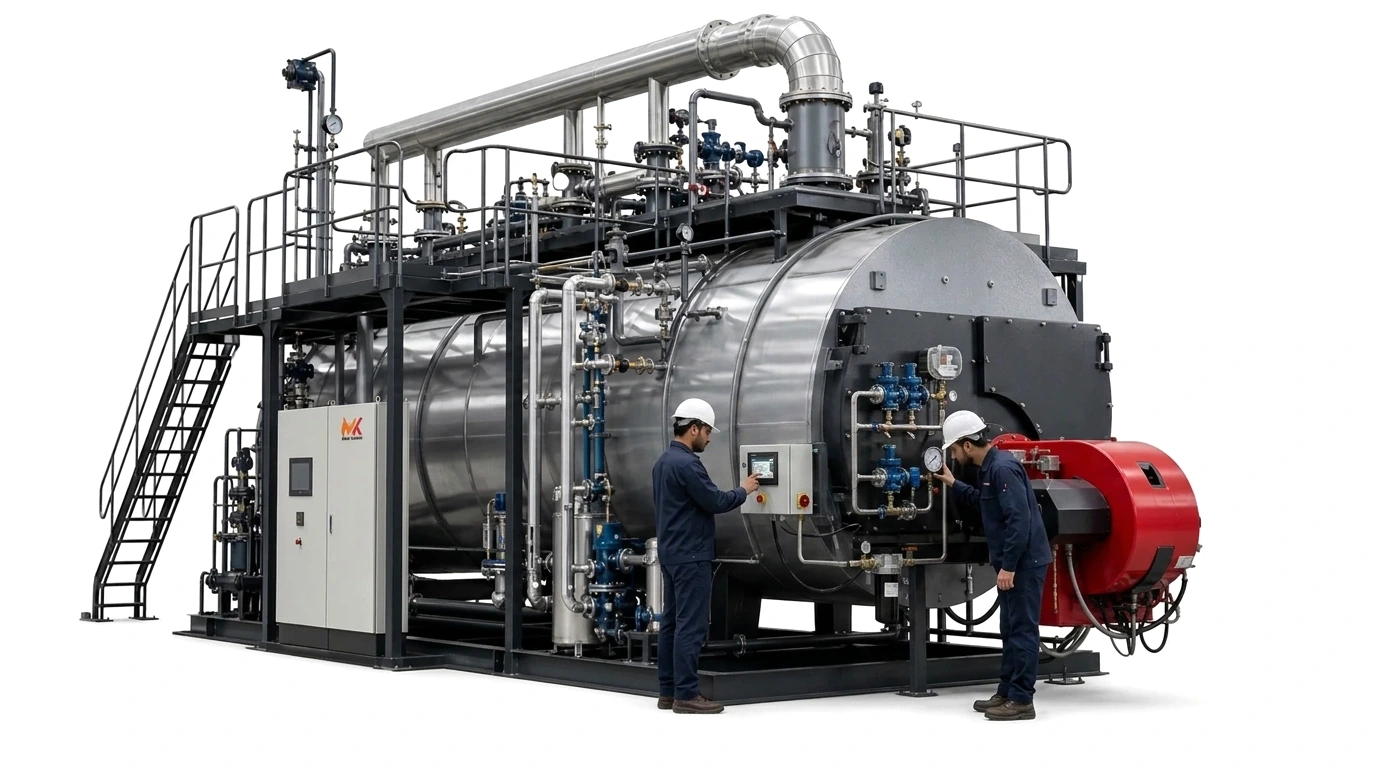
By eleven in the morning, factories along the Gazipur, Savar, Narayanganj and Narsingdi gas corridor watch the same needle drop: line pressure that read 8-10 PSI at dawn falls to 1-3 PSI by mid-morning and stays there through the afternoon shift. Below roughly 4 PSI, most industrial gas burners cannot maintain a stable flame, and a boiler running short on pressure does not fail gracefully - it trips, cycles, or has to be shut down before it turns into a combustion safety problem.
The instinctive fix - a booster pump bolted onto the gas inlet - is the one option that makes the situation worse rather than better.
Why a gas booster pump is a hazard, not a fix
A mechanical booster pulls harder on the distribution line than the line was designed to be pulled on. In a shared industrial gas corridor, that has two consequences:
- It worsens pressure for every other consumer on the same main. A booster does not create gas - it draws it faster from upstream, and on an already-strained network that pulls pressure down further for neighbouring factories.
- It creates a flashback and vacuum risk. Depending on how the suction side is configured, a booster can pull the line pressure at the meter below the point the appliance and the meter were rated for, which is exactly the condition regulators and gas safety codes prohibit unauthorised boosting to avoid.
Titas Gas does not permit customer-side boosting on the distribution network, and an inspector who finds one during an OCIoB or gas safety visit treats it as a violation, not a workaround. It is also the kind of finding that puts an entire connection at risk during renewal, not just the boiler's own certificate. The fix belongs on the combustion side of the meter, not the supply side.
Retrofit options that work in front of the existing pressure vessel
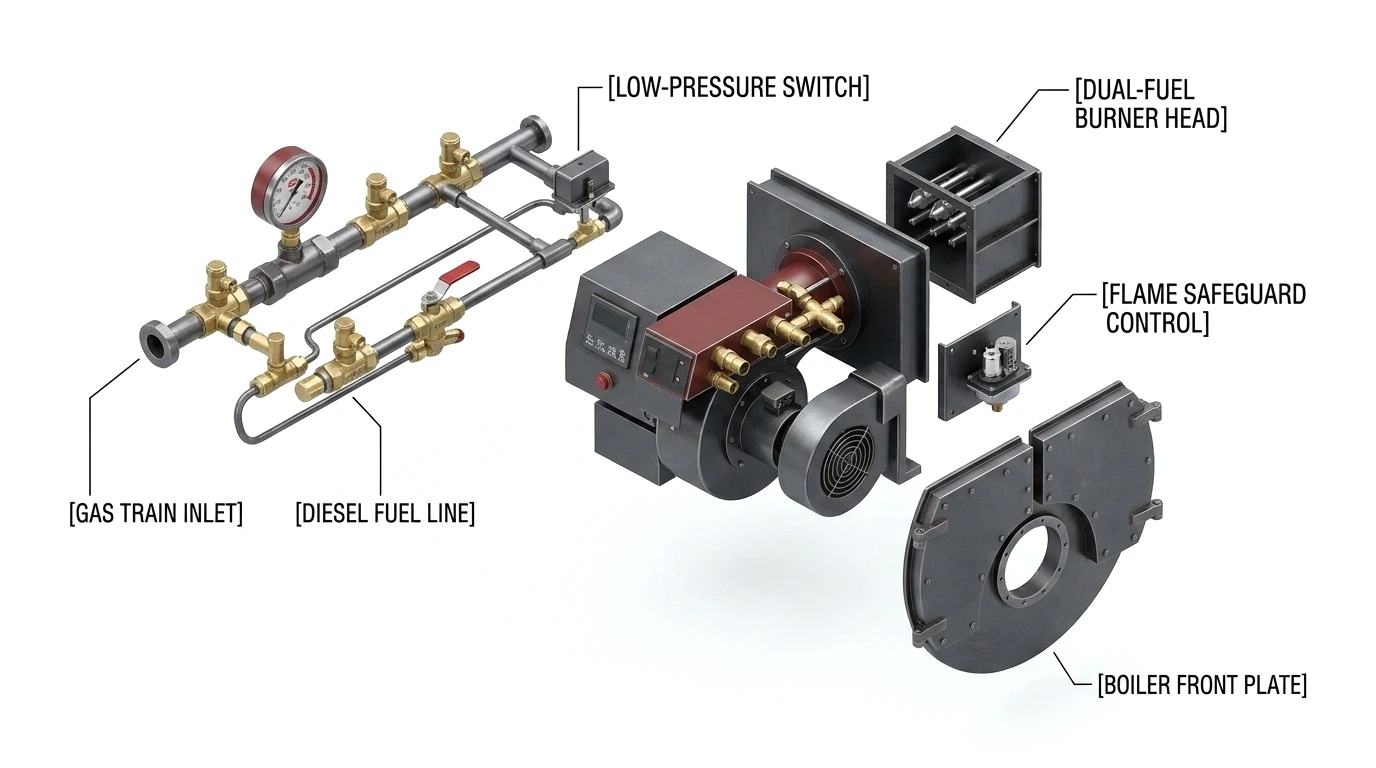
None of the following options touch the boiler shell, the safety valve or the existing OCIoB registration. They change what burns, or what backs up the gas, ahead of the furnace.
| Option | How it works | Best fit | Typical commissioning time |
|---|---|---|---|
| Pre-furnace pressure-adapted burner | Modified burner head and modulation curve tuned to fire stably down to 1-2 PSI instead of the standard 4+ PSI minimum | Plants where gas is available but consistently weak, not absent | 1-3 weeks |
| Dual-fuel gas/diesel burner | Single burner head switches automatically between gas and diesel below a set pressure threshold | Plants needing guaranteed uptime through unpredictable pressure swings | 1-2 weeks |
| Hybrid gas-biomass setup | External biomass combustor feeds the furnace during low-pressure hours; gas resumes automatically when pressure recovers | Plants with steady access to rice husk or briquette, running low pressure for a large part of the shift | 3-6 weeks |
A pressure-adapted burner is the lightest intervention and the right first step if gas never disappears entirely, just weakens. A dual-fuel burner is the standard answer for factories that need a guaranteed second fuel path with minimal engineering change. A hybrid gas-biomass setup costs more up front and takes longer to commission, but it removes the ongoing diesel bill entirely rather than just guaranteeing uptime - worth comparing against the full economics of a gas-to-biomass conversion if low pressure has become a daily rather than seasonal problem, not just a winter curtailment issue.
Signs your burner is already outside its safe operating range
Low pressure does not always announce itself as a flameout. Watch for these before the burner trips on its own:
- Flame lift-off or a yellow, lazy flame instead of the usual sharp blue cone - a sign the air-fuel ratio has drifted as gas pressure falls, which wastes fuel and raises carbon monoxide risk long before the burner actually cuts out.
- Repeated ignition lockouts as the flame safeguard control fails to detect a stable flame at marginal pressure - each lockout is the control system doing its job, not a fault to bypass.
- A rising stack temperature with falling steam output, which usually means the burner is drawing more excess air to hold a flame at low pressure, burning fuel less efficiently than the gauge alone would suggest.
Any of these three is a signal to stop firing on gas and switch to the standby fuel path rather than pushing the burner further outside its rated band, whether or not the retrofit is finished yet.
Immediate steps before the retrofit is commissioned
A retrofit takes one to six weeks depending on scope. Production cannot stop for that long, so the immediate priority is protecting the current shift schedule while the permanent fix is installed:
- Log pressure at the meter every hour for one week. Most factories guess at their low-pressure window; the actual data usually shows it is narrower and more predictable than assumed, which changes which retrofit makes sense.
- Set a hard trip threshold with the burner technician, rather than running the burner into an unstable flame condition and hoping it holds - an unstable flame at marginal pressure is a bigger safety risk than a planned shutdown.
- Pre-stage a temporary diesel-fired standby burner if one is available in the area, to bridge the gap between now and commissioning, rather than running the primary burner outside its rated pressure band.
- Notify the shift planning team of the logged pressure window, so production is scheduled around the low-pressure hours rather than discovered mid-shift when the boiler trips.
Getting a retrofit assessed quickly
Pressure problems that cost a shift a day do not leave room for a slow quotation process. Our team provides 24/7 emergency boiler service, burner controls and pressure switches, and carries out on-site inspection within 24 to 48 hours. We measure your actual pressure profile against your burner's rated minimum, and recommend the retrofit—pressure-adapted burner, dual-fuel, or hybrid biomass—that matches your exact supply profile—contact our engineering desk.
Common questions
Why can't I just install a gas booster pump to fix low pressure?
A mechanical booster draws gas from the distribution main at a rate the main was not designed to supply, which can pull the line pressure down further for neighbouring consumers and, in the wrong configuration, create a vacuum condition that risks flashback into the supply network. Titas Gas and the Boiler Act inspection regime both treat unauthorised booster installation as a compliance failure, not a permitted fix.
What is the fastest retrofit if my boiler is losing gas pressure every day shift?
A dual-fuel burner conversion - gas and diesel on the same burner head, switching automatically below a set pressure threshold - is usually the fastest to commission, often within one to two weeks, because it does not touch the pressure vessel or require a new OCIoB registration.
Do I need to replace my boiler if gas pressure keeps failing?
No. Pre-furnace attachments, dual-fuel burners and hybrid gas-biomass combustors all work in front of the existing pressure vessel. The vessel, its safety valve and its registration stay exactly as they are; only the fuel and combustion train in front of it changes.
More from the blog
- MaintenanceAn annual boiler maintenance checklist for factory managersPlan daily records, periodic servicing and the annual shutdown with clear responsibilities, inspection evidence and a controlled return to service.
- Maintenance planningBoiler AMC or breakdown calls: compare the full costCompare a boiler annual maintenance contract with on-demand repairs using downtime assumptions, service scope, response commitments and spare-parts exclusions.