
Industrial safety and explosion prevention
7 critical engineering protocols to prevent industrial boiler explosions
A boiler explosion is a catastrophic event carrying the kinetic energy of dynamite. Here are the 7 non-negotiable safety protocols for low-water interlocks, safety valve calibration, thermal shock mitigation, and flame safeguard testing in Bangladeshi factories.
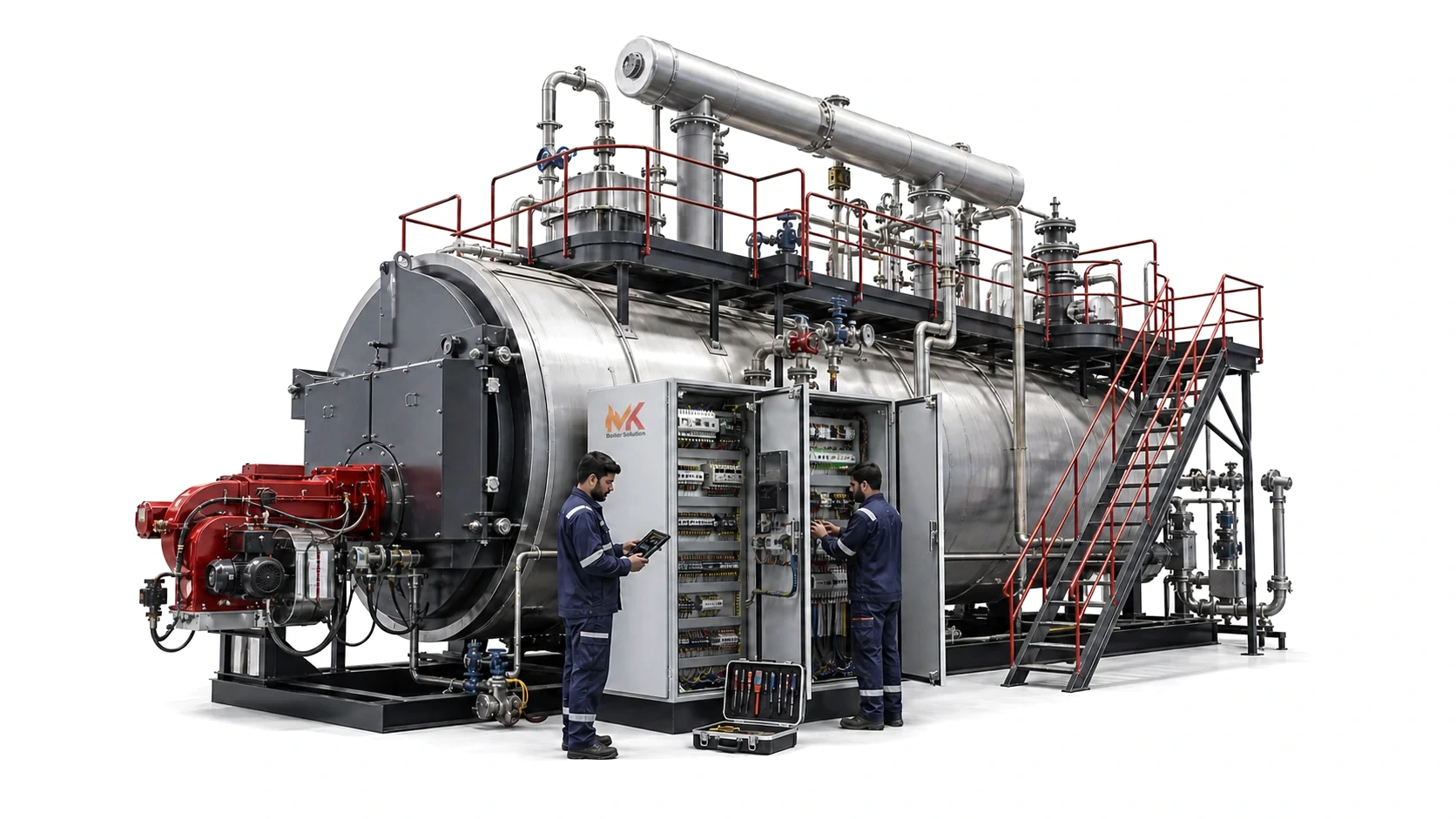
A 5 ton/hr industrial steam boiler operating at 10 bar (145 PSI) contains the stored thermodynamic energy equivalent to several hundred kilograms of TNT. If that pressure vessel suffers a catastrophic shell breach or crown failure, pressurized water instantly flashes into steam with an expansion ratio of 1,600 to 1, releasing an explosive shockwave capable of leveling factory structures and claiming lives.
In industrial hubs across Gazipur, Savar, Narayanganj, and Chittagong, boiler explosions remain an acute risk when safety devices are bypassed, water treatments are neglected, or unqualified personnel override automated interlocks. Industrial safety is not a matter of luck; it is governed by seven non-negotiable engineering protocols.
The mechanics of catastrophic boiler failures
To prevent explosions, plant engineers must understand the thermodynamic mechanisms behind them:
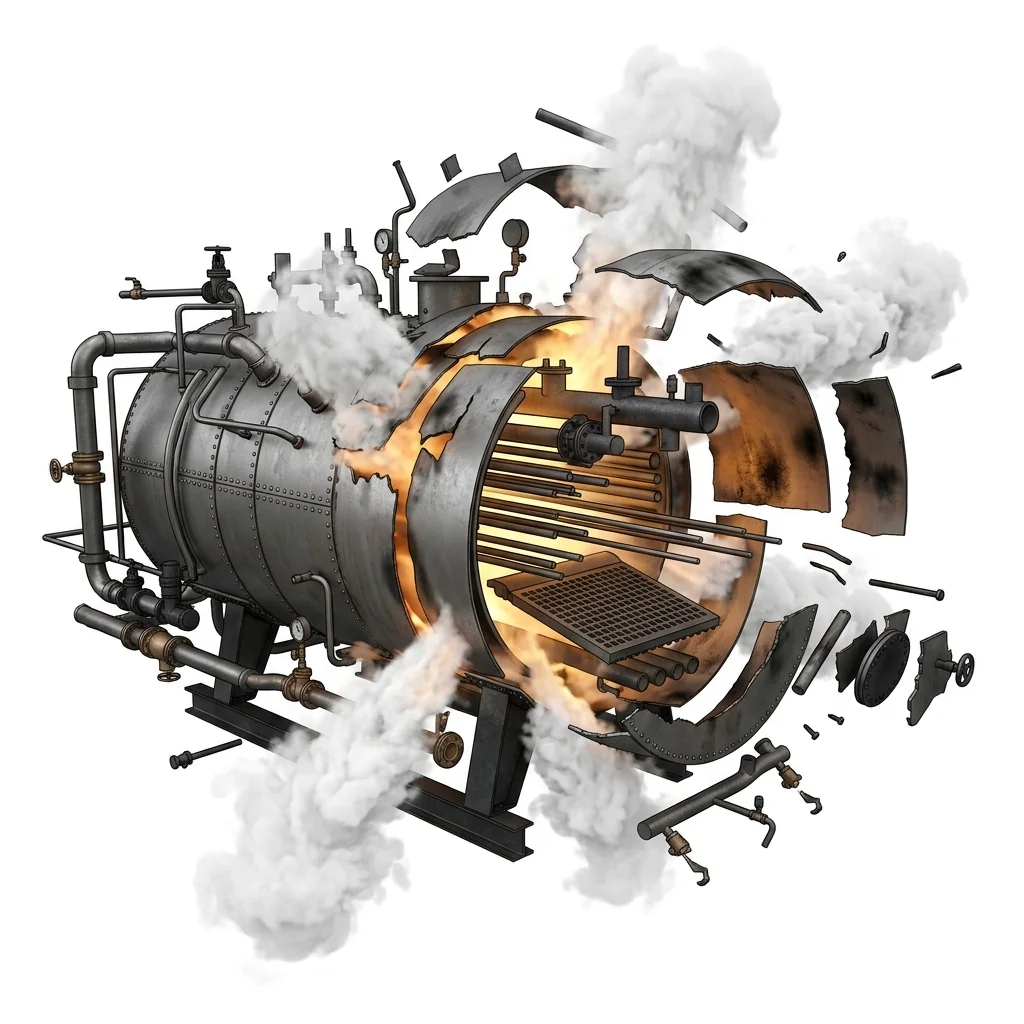
When a pressure vessel fails, it almost always follows one of three structural pathways:
- Thermal overheating & dry firing (Low Water): Uncooled metal softens under furnace heat, leading to crown sheet collapse or tube pullout.
- Overpressurization: Steam pressure exceeds the vessel's burst limit because safety relief valves are undersized, seized, or mechanically gagged.
- Severe water hammer & shockwave propagation: Rapid valve opening or condensate slugging sends destructive pressure waves through the steam header.
The 7 non-negotiable boiler safety protocols
Protocol 1: Daily testing of dual low-water fuel cutoffs (Mobrey switches)
The low-water fuel cutoff (LWCO) is the primary line of defense against catastrophic dry firing. Industrial boilers must be equipped with two independent, redundant cutoffs: an external float chamber (e.g., Mobrey magnetic switch) and an internal conductivity probe.
- The Chamber Blowdown Protocol: Once per shift, the operator must open the drain cock on the external float chamber. As water drains, the float must drop, instantly breaking the electrical safety circuit to kill the burner and trip the fuel shutoff valve within 2 seconds.
- Quarterly Float Inspection: During planned maintenance, the float chamber must be opened, descaled of all sediment, and the mercury/reed switches verified for zero electrical contact resistance.
Protocol 2: Strict safety relief valve calibration & weekly easing tests
A boiler's spring-loaded full-lift safety valves are the ultimate mechanical overpressure relief.
- Weekly Manual Easing: Once a week, while the boiler operates at ≥ 75% of design pressure, the operator must pull the manual lifting lever to flush the seat and confirm the spindle moves freely without binding.
- Dual Valve Staggered Setpoints: For boilers equipped with dual safety valves:
- Valve 1: Set precisely at the Maximum Allowable Working Pressure (MAWP, e.g., 10.0 bar).
- Valve 2: Set at 103% of MAWP (e.g., 10.3 bar) with total combined relieving capacity exceeding 100% of maximum continuous steam rating (MCR).
- Never Alter Spring Compression: Setting safety valves must only be executed by certified valve technicians using a calibrated test bench with lead security seals applied upon completion.
Protocol 3: 30-minute burner pre-purge & UV flame scanner interlocks
Furnace explosions occur when unburnt gas, diesel vapor, or volatile solid fuel gases accumulate in the combustion chamber and ignite unpredictably upon pilot light activation.
- Mandatory Pre-Purge: The automated burner management system (BMS) must force the combustion air fan to run at high fire for at least 30 to 60 seconds (delivering at least 4 to 6 complete air changes through the furnace and smoke tubes) before the ignition electrode sparks.
- UV Flame Scanner Integrity: Ultraviolet flame detectors must trip fuel solenoids within 1.0 to 1.5 seconds of flame failure. Never bypass a flickering scanner with electrical jumpers.
Protocol 4: Controlled cold warm-up to prevent fatal thermal shock
Firing a cold boiler from 0 to 10 bar in 20 minutes is one of the most common causes of cracked tube sheets and stay-bolt shearing.
- Controlled Firing Rate: Raise steam pressure from cold at a maximum rate of 1.5°C to 2.0°C per minute.
- Vent Valve Open to 1.0 Bar: Keep the top air vent valve open until positive steam emerges (at approximately 1.0 bar / 15 PSI) to expel non-condensable air, preventing localized vacuum stresses and dissolved oxygen corrosion.
Protocol 5: Gauge glass flushing & reflex column verification
A false water level reading—where a clogged water column shows water when the boiler is actually bone-dry—has caused dozens of fatal explosions.
- Daily Blow-Through Sequence: Operators must execute the 5-step gauge glass blow-through routine (isolate steam, blow water; isolate water, blow steam; verify fast water meniscus rebound).
- Dual Column Redundancy: If the two gauge glasses show different water levels, the operator must immediately verify against the Mobrey column and never assume the higher reading is correct.
| Safety Protocol | Frequency | Diagnostic Standard | Critical Failure Trigger |
|---|---|---|---|
| Float Chamber Blowdown | Every Shift (Daily) | Burner cuts off within <2 secs | Clogged sensing line, sticking float |
| Manual Safety Valve Easing | Weekly (at ≥ 75% MAWP) | Valve opens smoothly, zero stem leakage | Seized spindle, calcified valve seat |
| Gauge Glass Blow-Through | Every Shift (Daily) | Fast water column rebound | Blocked water/steam isolate cock |
| Burner Pre-Purge Verification | Continuous / Every Start | Minimum 4 complete air volume changes | Bypassed air pressure differential switch |
| Safety Valve Pop Calibration | Annual (OCIoB Audit) | Opens at 1.0× MAWP, drops ≤ 4% | Altered spring tension, missing lead seal |
Protocol 6: Preventing water hammer in main steam distribution headers
When high-pressure steam encounters cold condensate pooled in an un-drained pipe, the steam condenses instantaneously, creating a localized vacuum that accelerates slugs of water at bullet speeds (>100 km/h). The resulting shockwaves fracture cast-iron valves and rip flanged elbows apart.
- Always Warm Pipes Slowly: Crack open header bypass valves and drain bypass traps completely before introducing full steam flow.
- Install Thermodynamic Trap Drip Legs: Ensure every 30 to 50 meters of main steam line has a generously sized collection drip leg with an active steam trap.
Protocol 7: Comprehensive operator certification & emergency drills
The most advanced safety switches cannot protect a plant if operators are untrained or panicking during an anomaly.
- The Golden Low-Water Rule: If water disappears completely below the gauge glass, NEVER feed water. Cutting fuel, cutting fans, and letting the boiler cool naturally is the only action that prevents catastrophic explosive flashing.
- Mandatory Class I / II Boiler Attendants: Ensure only qualified, government-certified operators are permitted to manage burner controls.
Schedule an industrial boiler safety & interlock audit
Do not wait for a critical near-miss or a failed regulatory audit to verify your boiler's safety infrastructure.
MK Boiler Solution offers certified Industrial Boiler Safety Audits across all industrial belts in Bangladesh. Our team inspects and tests safety relief valves, overhauls Mobrey water controllers, verifies burner flame-safeguard response times, and trains your boiler room crew on 24/7 emergency boiler service protocols—ensuring total compliance and complete peace of mind.
Common questions
What is the single most common root cause of industrial boiler explosions?
Low-water condition leading to dry firing is responsible for over 70% of catastrophic boiler explosions worldwide. When water level drops below the crown sheet or top fire-tube row, uncooled steel reaches temperatures above 700°C–900°C within minutes, losing 90% of its tensile strength. If cold water is suddenly pumped into the red-hot vessel, it flashes instantaneously into high-pressure steam, generating explosive shockwaves that tear the shell open.
How often should boiler safety relief valves be tested in an operating plant?
Plant operators must perform a manual easing lever lift test once every week while the boiler is under at least 75% of working pressure to ensure the valve disc is not calcified or stuck to the seat. An annual full-pressure operational pop test—verifying exact lifting pressure, blowdown range (typically 2–4% drop), and reseating—must be conducted on a certified test bench or under authorized engineering supervision during OCIoB renewal.
What is the golden rule if a boiler operator discovers an extreme low-water emergency?
NEVER pump feedwater into an overheated boiler during a dry-firing emergency. The operator must immediately cut fuel and burner power, stop forced/induced draft fans, isolate the main steam stop valve, and allow the vessel to cool down completely by natural convection before conducting a non-destructive inspection. Pumping cold water into an overheated furnace crown triggers instantaneous steam flashing and catastrophic rupture.
More from the blog
- MaintenanceAn annual boiler maintenance checklist for factory managersPlan daily records, periodic servicing and the annual shutdown with clear responsibilities, inspection evidence and a controlled return to service.
- Maintenance planningBoiler AMC or breakdown calls: compare the full costCompare a boiler annual maintenance contract with on-demand repairs using downtime assumptions, service scope, response commitments and spare-parts exclusions.