
Water treatment
Why Bangladeshi groundwater destroys boiler tubes
Groundwater across the delta carries high calcium and magnesium hardness plus dissolved oxygen. Untreated, it scales tubes within months, drives fuel consumption up and eventually splits the metal. Here is the treatment that prevents it.
Pull a tube from a boiler that has run two years on untreated Dhaka groundwater and the failure is always the same story: a hard grey-white layer on the water side, metal discoloured underneath, and a bulge where the tube could no longer pass its heat into the water.
The chemistry behind it is simple and entirely preventable.
What the water carries
Groundwater across the delta typically shows:
| Parameter | Typical raw water | Boiler feedwater target |
|---|---|---|
| Total hardness (as CaCO₃) | 150 to 400 ppm | Under 5 ppm |
| Dissolved oxygen | 6 to 8 ppm | Under 0.02 ppm |
| Iron | 0.5 to 5 ppm | Under 0.1 ppm |
| Silica | 15 to 40 ppm | Depends on pressure |
Two of those cause most of the damage.
Hardness becomes scale
Calcium and magnesium stay dissolved in cold water. Heat them and they drop out onto the hottest surface available, which is the fire side of your tubes. Scale conducts heat at roughly one fortieth the rate of steel, so the tube metal runs hotter and hotter for the same firing rate.
The fuel penalty is the first symptom - around two per cent per millimetre. The second symptom is the expensive one: metal that spends months above its design temperature creeps, bulges and eventually splits.
Oxygen becomes pitting
Dissolved oxygen attacks steel at the water line and in the economiser, producing deep, narrow pits rather than general wastage. A pit does not announce itself on a fuel bill. It shows up as a leak, usually during a hydraulic test, sometimes in service.
The treatment train that works here
1. Softening
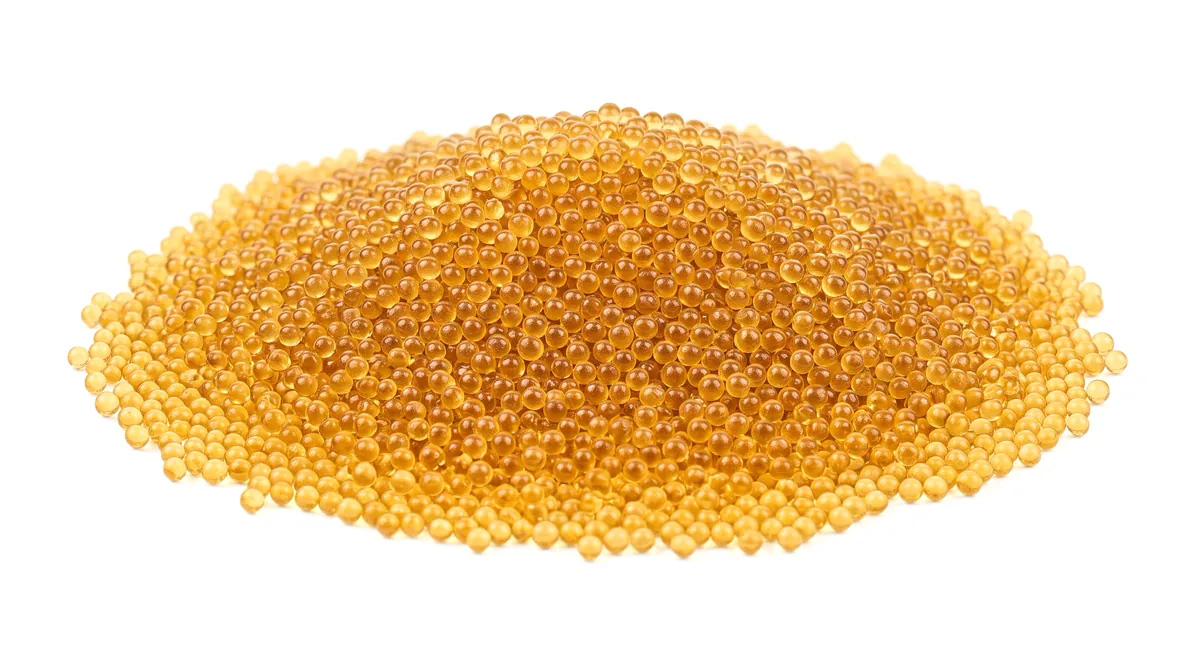
A strong acid cation resin exchanges calcium and magnesium for sodium. Sizing is a function of raw hardness and daily make-up volume, and the regeneration schedule follows from that. Two rules keep a softener honest:
- Test outlet hardness daily. A softener that has quietly exhausted looks exactly like one that is working.
- Regenerate on volume, not on the calendar. Production volume moves, and a fixed schedule over-regenerates in a slow week and under-regenerates in a busy one.
2. Deaeration and oxygen scavenging
Heat drives most oxygen out. A deaerator running at 0.2 bar and about 105 °C takes feedwater to roughly 0.02 ppm; a well-run hot well gets partway there. The remainder is chemically scavenged - sulphite for lower pressure plants, with the residual tested daily.
Returned condensate helps twice over: it is hot, and it is already low in oxygen and hardness.
3. Internal treatment and pH
Phosphate dosing precipitates any hardness that slips through as a soft sludge that blowdown removes, rather than as bonded scale. Boiler water pH is held between about 10.5 and 11.5 so the protective magnetite layer stays intact.
4. Blowdown
Softening does not reduce dissolved solids, it swaps one ion for another. As steam leaves, solids concentrate. Blowdown is the only route out.
- Continuous (surface) blowdown holds TDS at the working limit, and its heat is worth recovering into the feed tank.
- Intermittent (bottom) blowdown clears the sludge that phosphate dosing creates, in short sharp bursts once per shift.
Too little blowdown gives foaming, carryover and wet steam. Too much throws treated hot water away.
The daily log that prevents all of it
Every factory that avoids tube failures keeps the same short log:
- Softener outlet hardness
- Feedwater temperature and pH
- Boiler water TDS, pH and phosphate residual
- Sulphite residual
- Blowdown carried out, and by whom
Five lines, ten minutes a shift. It is the cheapest maintenance in the plant, and it is the record an inspector reads first when the internal examination looks good.
When the scale is already there
If the tubes are scaled, chemical descaling with an inhibited acid, followed by neutralising and passivation, restores heat transfer. It is a controlled job - the wrong strength or an exhausted inhibitor attacks the parent metal instead of the deposit. After descaling, fix the water treatment. Otherwise the same layer is back inside a year.
Our water treatment team sizes softeners and dosing systems from your own water analysis, commissions the daily log with your operators, and carries out descaling during a planned shutdown.
Common questions
How much fuel does scale waste?
About 2 per cent extra fuel for every millimetre of scale on the fire side, and more for silica-rich scale, which insulates worse than calcium carbonate. A three millimetre layer is a measurable line on the gas bill.
What hardness is acceptable for boiler feedwater?
Under 5 ppm as CaCO3 leaving the softener, and effectively zero in the feedwater tank. Raw groundwater across Dhaka, Gazipur and Narayanganj commonly runs 150 to 400 ppm, so softening is not optional.
Why does the boiler need blowdown if the water is softened?
Softening exchanges hardness for sodium, it does not remove dissolved solids. Those solids concentrate as steam leaves, so blowdown is what holds boiler water TDS inside its limit and prevents carryover.
More notes
- Compliance and inspectionBoiler inspection and certification in Bangladesh, step by stepEvery steam boiler in Bangladesh needs an annual certificate from the Office of the Chief Inspector of Boilers. Here is what the inspection covers, how to prepare the plant and what stops a certificate being issued.
- Sizing and specificationHow to size a steam boiler for a textile dyeing factoryNameplate figures do not size a boiler. Measure peak against average steam demand in kg/hr, fix the working pressure and count the condensate you get back, then pick the capacity from those three numbers.