
Clean steam and validation
Pure steam vs utility steam for pharma and food plants
Separate utility steam, culinary steam and pure steam by contact risk, then specify generation, piping and testing that a WHO-cGMP or buyer audit can accept.
This post is also available inবাংলা
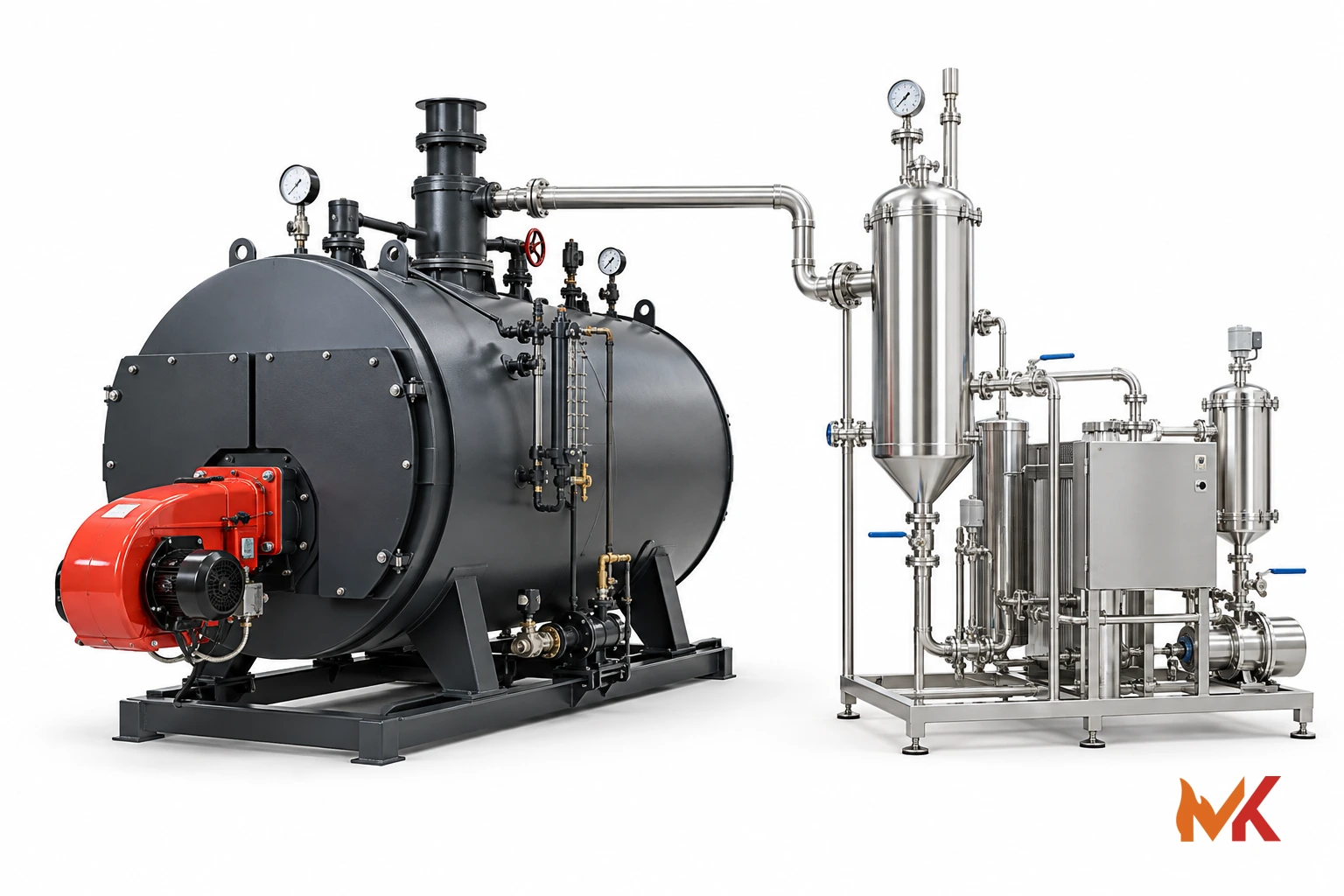
A pharmaceutical plant in Gazipur can hold a perfect boiler log and still fail a buyer audit on steam. The question the auditor asks is narrower than boiler performance: at each user point, can the steam or its condensate touch product, packaging or a product-contact surface? The answer decides whether utility steam is acceptable, or whether that point needs culinary or pure steam generated separately.
Most plants in Bangladesh already run a fired boiler for utility duties. Clean steam is not an upgrade to that boiler. It is a second generation stage, fed by the first, built in different materials and tested against a different specification.
Three grades, defined by contact
| Grade | Typical duty | Generation | Contact with product |
|---|---|---|---|
| Utility (plant) steam | Jacket heating, HVAC coils, hot water calorifiers, dryers | Fired boiler, with normal boiler treatment chemicals | None; separated by a heat transfer surface |
| Culinary (filtered) steam | Direct injection in food and beverage processes | Utility steam through a sanitary separator and fine filter | Direct, in food processes |
| Pure (clean) steam | Sterilisation (SIP), autoclaves, sterile-area humidification | Dedicated clean steam generator fed with treated water | Direct, in sterile pharmaceutical processes |
The distinction that matters commercially: utility steam carries whatever the boiler carries. Amines, phosphates, oxygen scavengers and carryover from the boiler drum are all acceptable in a closed heating loop, and unacceptable where condensate can reach a vial, a tablet press surface or a filling nozzle.
Culinary steam is utility steam that has been cleaned mechanically. Pure steam is not utility steam at all; it is generated afresh from treated water in a stainless generator with no treatment chemicals dosed.
The standards your specification should name
For sterilisers, EN 285 sets the non-condensable gas, dryness and superheat limits for the steam supplied, along with the condensate quality expected. In the UK healthcare estate, HTM 01-01 (which superseded HTM 2010) applies the same thinking to sterilisation services. For pharmaceutical manufacturing generally, WHO-cGMP guidance treats steam that contacts product as a utility requiring qualification, monitoring and documented specification. Food plants working to FSSC 22000 or a brand buyer's protocol will be asked for the culinary steam filter rating and its change record.
The full text of EN 285 is published through BSI, the PIC/S GMP guides set out the inspection expectations most regulators align to, and in Bangladesh the Directorate General of Drug Administration is the licensing authority that will ask to see them.
Name the standard in the purchase specification, not in the commissioning report. A generator bought without a stated quality basis cannot be retrofitted into compliance cheaply, and the distribution pipework is usually the larger cost.
| Requirement area | What EN 285 style specifications look at | Why it fails in practice |
|---|---|---|
| Non-condensable gases | Volume of gas per volume of condensate | Feedwater not deaerated; air drawn in through a poor vacuum sequence |
| Dryness value | Fraction of dry saturated steam at the user point | Uninsulated runs, no separator, undersized traps |
| Superheat | Temperature rise on throttling to atmosphere | Pressure reduction without a proper station design |
| Condensate chemistry | Conductivity, pH, heavy metals, endotoxin where required | Carbon steel or brass fittings left in a clean line |
| Bioburden and endotoxin | Sampled at the user point | Dead legs, poor drainage, rouging in the distribution loop |
What a clean steam installation actually contains
A clean steam generator is usually a vertical shell-and-tube or plate unit, heated by utility steam on the primary side and fed with purified water on the clean side. The feedwater grade depends on the duty: softened and dechlorinated water for some food applications, RO permeate or water for injection quality for sterile pharmaceutical service.
The parts that decide whether the system passes are downstream of the generator:
- Materials. Wetted parts in AISI 316L stainless steel, with an internal surface finish specified as a Ra value, not described as "polished". Orbital butt welds, documented weld maps and a boroscope inspection record for critical joints.
- Drainability. Continuous falls to drain points, no horizontal dead legs beyond the accepted limit relative to branch diameter, and diaphragm or bellows-sealed valves rather than threaded industrial valves.
- Traps and separators. Clean steam traps in stainless steel with sanitary connections. A cast-iron trap on a pure steam branch fails on material grounds regardless of how well it drains.
- Air removal. A non-condensable gas load that would be invisible on a utility header becomes the reason an autoclave fails its Bowie-Dick test.
- Sample points. Fixed, identified sampling connections at the far end of the loop and at critical users, so periodic testing is repeatable.
- Insulation and pressure reduction. A reducing station sized so the steam arrives saturated, not superheated, at the steriliser inlet.
The utility boiler still matters. It supplies the heating medium, so its availability, pressure stability and feedwater treatment govern whether the clean steam generator can hold output during a batch. Sites with unstable gas pressure in Gazipur, Savar and Narayanganj should size the primary side for the worst pressure they actually see, not the nameplate.
An illustrative budgeting frame
Assume a plant needs 500 kg/h of pure steam for two autoclaves and a small SIP loop. A planning-level split of the installed cost usually looks less like equipment and more like everything around it:
| Cost element | Illustrative share of installed cost |
|---|---|
| Clean steam generator package | 35–45% |
| Feedwater treatment (RO/EDI or upgrade of existing) | 10–20% |
| 316L distribution, valves, traps, supports | 20–30% |
| Qualification: DQ, IQ, OQ, PQ documentation and testing | 10–15% |
| Insulation, utilities, civil and commissioning | 5–10% |
These are planning proportions for scoping a budget, not a quotation. The qualification line is the one most often left out of an early budget and the one an auditor asks for first.
Decide point by point, then write it down
Walk the plant with the process owner and classify every steam user: indirect heating, direct injection into product, or sterilisation and product-contact surfaces. Most user points in a typical Bangladeshi pharmaceutical or food plant stay on utility steam, which keeps the clean steam generator small and the qualification scope manageable.
Where the classification is uncertain, resolve it on contact risk rather than convenience. Moving one filling-room humidification point from utility to pure steam is far cheaper at the design stage than after a buyer audit has flagged it.
Keep the classification table, the material certificates, the weld records and the periodic test results in one file. That file, not the boiler efficiency report, is what a WHO-cGMP inspector or a brand auditor reads.
Before specifying the clean side, confirm the utility side is stable: review feedwater treatment and scale control and your boiler inspection and certification status. To scope a clean steam generator, distribution loop or validation support, contact our engineering desk or review our installation and commissioning service.
Related reading: Surviving low gas pressure (1-3 PSI) in Gazipur, Savar and Narayanganj and An annual boiler maintenance checklist for factory managers.
Common questions
Can a normal boiler produce pure steam if we improve the water treatment?
No. Pure steam is defined by the generator, the materials in contact with it and the absence of boiler treatment chemicals, not by feedwater quality alone. A utility boiler feeds the clean steam generator; it does not replace it.
Does every process in a food plant need pure steam?
No. Most heating duties are indirect and utility steam is appropriate. The classification depends on whether steam or its condensate can contact product or product-contact surfaces.
What evidence does an auditor expect?
A documented steam classification per user point, material and weld records for the distribution system, and periodic test results against the quality standard stated in your specification.
More from the blog
- Boiler selectionThermal oil heater vs steam boiler: choosing for your processCompare thermal fluid heaters and steam boilers on temperature, pressure, regulation, fire risk and running cost before committing capital in a Bangladesh plant.
- Steam efficiencyCondensate recovery: what it saves and what it costs to installWork out how much condensate your plant is dumping, what returning it is worth in fuel, water and chemicals, and which pump and pipework arrangement suits a dyeing floor.