
Green steam and LEED compliance
Achieving LEED certification in Bangladesh via steam and boiler upgrades
Industrial steam systems consume over 60% of a textile or RMG plant's thermal energy. Here is how flue gas economizers, pressurized condensate recovery, and digital O2 trim earn critical USGBC LEED Energy & Atmosphere points while cutting factory carbon footprint.
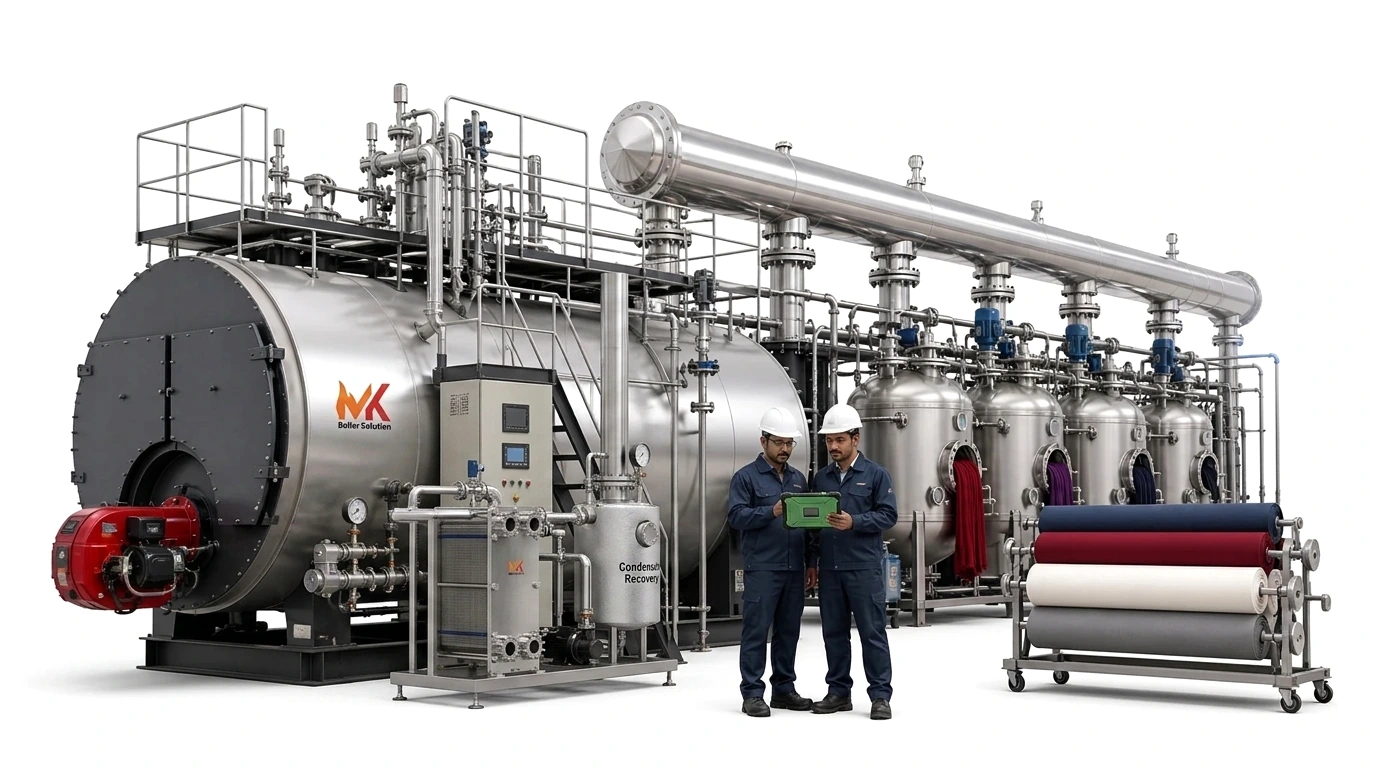
Bangladesh is home to the world’s highest concentration of USGBC LEED Platinum and Gold certified garment manufacturing facilities. From green textile corridors in Gazipur and Ashulia to modern industrial parks in Chittagong in Narayanganj and Chittagong, international apparel brands—including H&M, Inditex, Marks & Spencer, and PVH—consistently prioritize suppliers with audited low carbon intensity.
Yet while most plant engineers focus on solar rooftop panels, inverter drives, and rainwater harvesting, the single largest energy consumer in any textile dyeing, washing, or finishing mill sits on the boiler room floor. Generating industrial steam consumes over 60% to 75% of a factory’s total fossil and solid fuel budget. Upgrading that steam loop is the fastest, highest-ROI pathway to capturing critical LEED Energy and Atmosphere (EA) points.
How steam optimization drives LEED Energy & Atmosphere (EA) credits
Under USGBC LEED v4 and v4.1 for industrial facilities (BD+C and O+M), the Energy & Atmosphere (EA) credit category accounts for over 33% of all available points on the scorecard.
| LEED Credit Category | Key Mechanism | Typical Point Yield |
|---|---|---|
| EAp2: Minimum Energy Performance | Mandatory baseline efficiency compliance | Prerequisite (Required for all tiers) |
| EAc2: Optimize Energy Performance | Reducing total modeled thermal energy use by 10% to 30%+ | 6 to 18 Points |
| EAc1: Enhanced Commissioning | Validating thermal metering, draft switches, and flue sensors | 2 to 6 Points |
| WEc2: Indoor Water Use Reduction | Closed-loop condensate return saving demineralized water | 2 to 5 Points |
| MRc1: Life-Cycle Impact Reduction | Retrofitting existing pressure vessels vs scrapping metal | 1 to 4 Points |
To achieve Platinum certification (80+ points), an exporter cannot rely solely on electrical efficiency. The boiler house must demonstrate verified thermal heat recovery, oxygen-trimmed combustion, and minimal water discharge.
3 high-impact boiler upgrades for green factory scoring
Capturing maximum LEED scoring requires addressing three distinct thermal losses across the steam generation cycle: flue stack heat, water blowdown loss, and unreturned condensate sensible heat.
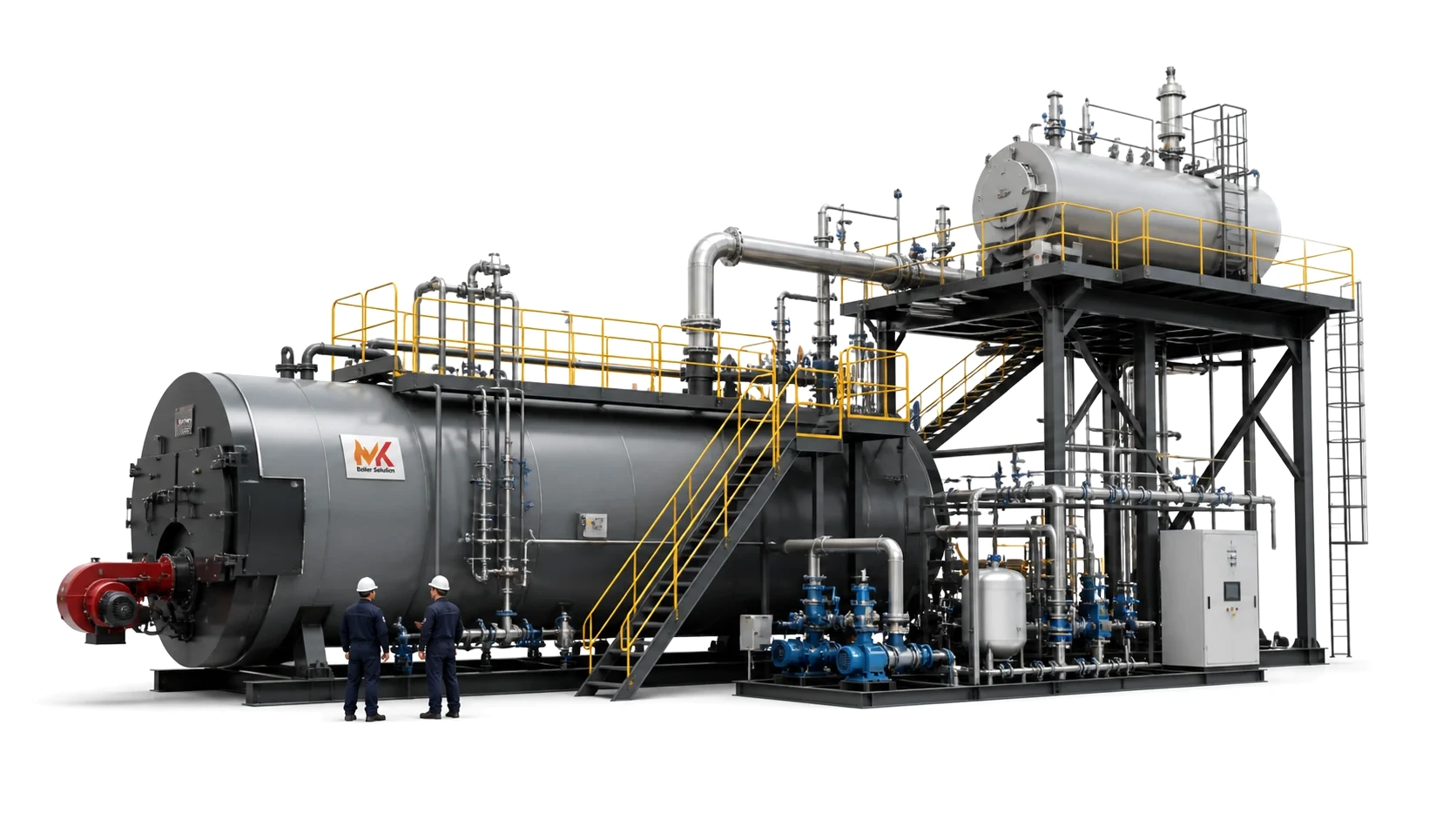
1. Flue gas economizers (Finned-tube heat exchangers)
In a standard three-pass fire-tube boiler operating without waste heat recovery, flue gases exit the stack at 200°C to 240°C, carrying away 8% to 12% of total combustion heat.
A stainless-steel or seamless carbon-steel finned-tube economizer is installed directly in the exhaust ductwork ahead of the ID fan. It captures this waste heat to preheat boiler feedwater from 60°C up to 90°C–98°C before entering the pressure vessel.
- The Rule of Thumb: Every 20°C drop in flue gas temperature yields a 1% increase in boiler thermal efficiency.
- Calculated Saving: Lowering stack temperature from 220°C to 130°C boosts overall efficiency by ~4.5%, reducing natural gas or biomass fuel consumption by thousands of tons annually.
2. Pressurized closed-loop condensate recovery
Discharging hot process condensate down the ETP drain is the single largest thermal waste in wet-processing textile mills.
Steam traps discharge condensate at temperatures between 90°C and 130°C depending on line pressure. When returned to an insulated, pressurized deaerator receiver rather than an open vented pit:
- Sensible heat retention: Every 6°C rise in feedwater temperature cuts fuel requirements by 1%.
- Feedwater chemical savings: Condensate is pure distilled water with 0 ppm hardness and zero dissolved solids (TDS), eliminating softener regeneration cycles and reducing chemical scale inhibitors by up to 70%.
- Reduced boiler blowdown: Lower incoming TDS means fewer blowdown cycles, preserving pressurized hot water inside the shell.
3. Digital O₂ trim & variable speed burner modulation
Uncontrolled excess air cools the furnace flame and wastes fuel by heating excess nitrogen that vents straight out the chimney.
Installing a zirconia O₂ sensor in the flue duct coupled with a digital modulating servo actuator continuously trims combustion air dampers. This maintains excess air at an optimal 3.0% to 3.5% O₂ (15–20% excess air) across high, medium, and low fire rates—saving 1.5% to 3.0% in annual fuel compared to mechanical linkage burners that drift out of calibration.
| Boiler Upgrade | Typical Capital Cost | Thermal Efficiency Gain | Typical Payback |
|---|---|---|---|
| Finned-Tube Stack Economizer | Moderate | +4.0% to +5.5% | 4 to 8 Months |
| Closed Condensate Return Loop | Low to Moderate | +6.0% to +12.0% | 3 to 6 Months |
| Continuous Blowdown Heat Recovery | Low | +1.5% to +2.5% | 4 to 7 Months |
| Digital Zirconia O₂ Trim Control | Low | +1.5% to +3.0% | 5 to 9 Months |
Calculating carbon footprint reduction for international buyers
European and US brand buyers enforce strict Science Based Targets (SBTi) and carbon reporting for Tier 1 and Tier 2 apparel suppliers.
A worked carbon reduction calculation for a Gazipur knit composite factory operating a 6 ton/hr steam boiler on natural gas for 6,000 annual operating hours:
- Baseline Annual Gas Consumption: ~3,060,000 m^3
- Total Thermal Efficiency Gain (Economizer + Condensate Return): 10.5%
- Annual Natural Gas Saved: 321,300 m^3/year
- Annual Financial Fuel Saving: 321,300 m^3 × BDT 30 = BDT 96.39 Lakh/year
- Avoided CO₂ Emissions: 321,300 m^3 × 1.93 kg CO_2/m^3 = 620 Metric Tons CO₂e/year
This 620-ton annual carbon abatement can be directly reported in the factory's annual HIGG FEM (Facility Environmental Module) index and USGBC LEED carbon accounting submittals.
Book a Green Steam & LEED scoring audit
Achieving top-tier LEED Platinum certification and meeting brand buyer sustainability metrics requires precise thermal engineering, not guesswork.
MK Boiler Solution conducts comprehensive on-site Green Steam Audits across Gazipur, Savar, Narayanganj, and Chittagong. Our engineers deploy ultrasonic steam trap detectors, stack gas analyzers, and thermal cameras to map your plant's exact enthalpy losses and deliver a bankable, point-optimized heat recovery plan for management and LEED consultants.
Common questions
How do boiler room upgrades contribute to USGBC LEED certification in Bangladesh?
{ "Steam systems directly impact the Energy and Atmosphere (EA) credit category, which carries the largest point weight in LEED v4/v4": { "1 Building Design and Construction (BD+C) and Existing Buildings": "Operations and Maintenance (EBOM). Upgrades like flue gas economizers, automated blowdown heat recovery, and closed condensate return loops reduce baseline thermal energy consumption by 12% to 22%, earning up to 8 to 14 points under Optimize Energy Performance (EAc2)." } }
What is the efficiency gain and payback of a flue gas economizer on a 4 to 6 ton/hr boiler?
For every 20°C drop in stack exhaust temperature achieved by a finned-tube economizer preheating feedwater from 60°C to 95°C, boiler thermal efficiency increases by approximately 1%. Reducing stack temperature from 220°C down to 130°C captures a net 4.5% to 5.0% fuel saving, delivering a financial payback within 4 to 9 months in active knit dyeing and composite mills.
Why is condensate recovery critical for LEED water efficiency and energy scoring?
Returning clean high-pressure condensate at 85°C–95°C preserves pristine demineralized distilled water and sensible heat. Every 6°C rise in feedwater temperature reduces boiler fuel demand by 1%, while directly earning points under LEED Water Efficiency (WE) credits by slashing borehole groundwater extraction and chemical softening demand by up to 60% to 80%.
More from the blog
- MaintenanceAn annual boiler maintenance checklist for factory managersPlan daily records, periodic servicing and the annual shutdown with clear responsibilities, inspection evidence and a controlled return to service.
- Maintenance planningBoiler AMC or breakdown calls: compare the full costCompare a boiler annual maintenance contract with on-demand repairs using downtime assumptions, service scope, response commitments and spare-parts exclusions.