
Steam efficiency
The cost of failed steam traps in a Bangladesh factory
Calculate steam-trap losses in BDT, distinguish leaks from drainage faults, and build a repair list that your maintenance and finance teams can verify.
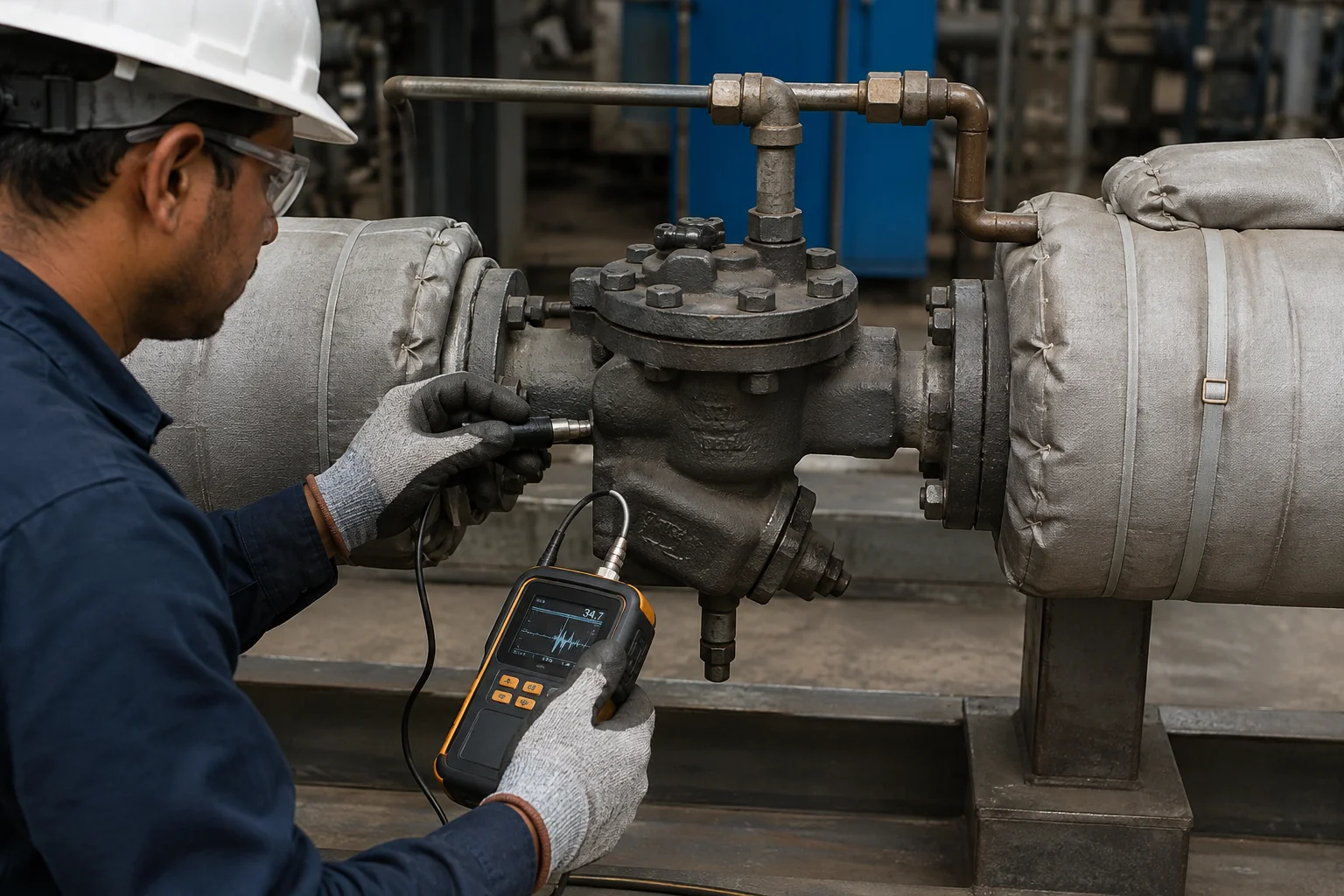
A dyeing floor can meet its temperature targets while quietly wasting steam through failed traps. The boiler operator responds by firing harder, procurement sees a higher fuel bill, and the defective drain point stays out of sight. For factories in Gazipur, Savar and Narayanganj, a steam-trap audit gives maintenance and finance a shared way to find that loss and decide what to repair first.
The useful result is a tagged asset list with evidence, repair costs and follow-up checks. A thermal photograph on its own is not enough to approve replacement of every hot trap.
What a trap should do
A steam trap drains condensate and releases air while limiting the escape of live steam. A failed-open trap can waste steam; a blocked or failed-closed trap can leave equipment waterlogged. The US Department of Energy recommends systematic inspection and repair, using methods including temperature, sound and ultrasonic checks. See its steam-trap inspection tip sheet.
The two failure modes need different business cases. Leakage is mainly an energy question. Poor drainage can also slow heating, upset batch consistency and contribute to water hammer. Neither should be diagnosed from pipe temperature alone.
| Finding during production | Possible explanation | What the survey should check |
|---|---|---|
| Continuous strong ultrasonic signal | Live-steam leakage or normal flow for that trap | Trap type, operating cycle, pressure and load |
| Cold process outlet | Blockage, failed-closed trap, or equipment out of service | Whether steam is actually being demanded |
| Visible vapour at an open discharge | Flash steam, live steam, or both | Upstream conditions and discharge arrangement |
| Slow heating with an apparently working trap | Backpressure, inadequate differential pressure or poor selection | Return pressure and process operating conditions |
| Repeated failure after replacement | Dirt, incorrect installation or a mismatched trap | Strainer condition, orientation and selection basis |
A transparent weekly loss calculation
Use this equation for a screening estimate:
Weekly loss = estimated steam leakage in kg/h × operating hours per week × marginal steam cost in BDT/kg.
Consider an illustrative trap with an assessed loss of 25 kg/h, operating 144 hours per week. Assume the site's marginal steam cost is 4.50 BDT/kg:
25 × 144 × 4.50 = 16,200 BDT per week.
These are planning assumptions, not a measured customer result or a Bangladesh fuel quotation. The leakage rate must come from an appropriate assessment. A trap fitted to a DN15 pipe does not necessarily have a 15 mm leak opening. Using nominal pipe size as the leak diameter can greatly overstate savings.
| Assumed leakage | Weekly hours | Assumed steam cost | Estimated weekly loss |
|---|---|---|---|
| 10 kg/h | 144 | 4.50 BDT/kg | 6,480 BDT |
| 25 kg/h | 144 | 4.50 BDT/kg | 16,200 BDT |
| 40 kg/h | 144 | 4.50 BDT/kg | 25,920 BDT |
Use the variable cost of producing the extra steam: fuel, make-up water, treatment chemicals and relevant power. Including fixed salaries or existing financing costs can inflate the recoverable amount. If your plant alternates between gas and liquid fuel, calculate separate scenarios for the hours on each fuel.
Turn the survey into a repair order
Assign each trap a durable ID and locate it on a simple plant drawing. Record its service, type, manufacturer, model, connection size, upstream pressure, return pressure and whether the connected process was running. Keep the test date and instrument findings alongside the diagnosis.
Classify each entry as operating normally, leaking, blocked, incorrectly selected or requiring retest. An idle machine belongs in the retest group. Replacing its cold trap during the survey may solve no problem at all.
For suspected drainage faults, review the whole station: isolation valves, strainer, check valve where required, pipe falls and return arrangement. A new trap cannot overcome every return-system problem. Give process-critical faults their own priority instead of ranking everything by estimated fuel savings.
Price the complete intervention
Suppose the installed repair costs 30,000 BDT and the 16,200 BDT weekly estimate proves recoverable. Simple payback is about 1.9 operating weeks. If only half the assumed loss is recoverable, it becomes about 3.7 weeks. Show both cases before approving a large survey programme.
The repair allowance should include access, insulation removal and reinstatement, fittings, labour and the required shutdown. Select replacement equipment for pressure, temperature, condensate load and backpressure, not only for matching flange dimensions. Repairs require qualified personnel and safe isolation; the audit is not an instruction to open a hot steam line.
Verify the result after restart
Retest each repaired station under normal process conditions. Confirm drainage, record the new acoustic pattern and check that the original heating complaint has cleared. Compare steam per tonne of production over similar product mixes, noting changes in fuel, production hours and condensate return.
Do not add every estimated trap saving directly to an unrelated boiler-efficiency estimate. The measures can overlap. Keep the original assumptions, completed work and measured trend in the same report so the next survey starts from a reliable baseline.
Pair the audit with a review of feedwater treatment and condensate quality. If your factory needs help locating losses, contact our engineering desk for a scoped steam-system inspection and repair programme.
Common questions
Does a hot steam trap mean it is leaking?
No. Temperature alone cannot distinguish normal operation, flash steam and live-steam leakage. Assess the trap type, load, pressure and ultrasonic pattern together.
Can pipe diameter tell me how much steam is escaping?
No. The effective leak opening and pressure difference matter. A DN15 connection does not mean the trap has a 15 mm open leak.
How should savings be confirmed?
Retest repaired traps and compare steam or fuel consumption at similar production loads. Keep assumed loss estimates separate from measured savings.
More from the blog
- MaintenanceAn annual boiler maintenance checklist for factory managersPlan daily records, periodic servicing and the annual shutdown with clear responsibilities, inspection evidence and a controlled return to service.
- Maintenance planningBoiler AMC or breakdown calls: compare the full costCompare a boiler annual maintenance contract with on-demand repairs using downtime assumptions, service scope, response commitments and spare-parts exclusions.