
Fuel sourcing and quality
Biomass boiler fuel comparison - rice husk vs. wood briquette vs. sawdust
NCV, moisture and ash percentage decide fuel cost per ton of steam more than the quoted price per kilogram does. A comparison of rice husk, wood briquette and sawdust for Bangladeshi boiler rooms, plus the handling faults that take each one out of service.
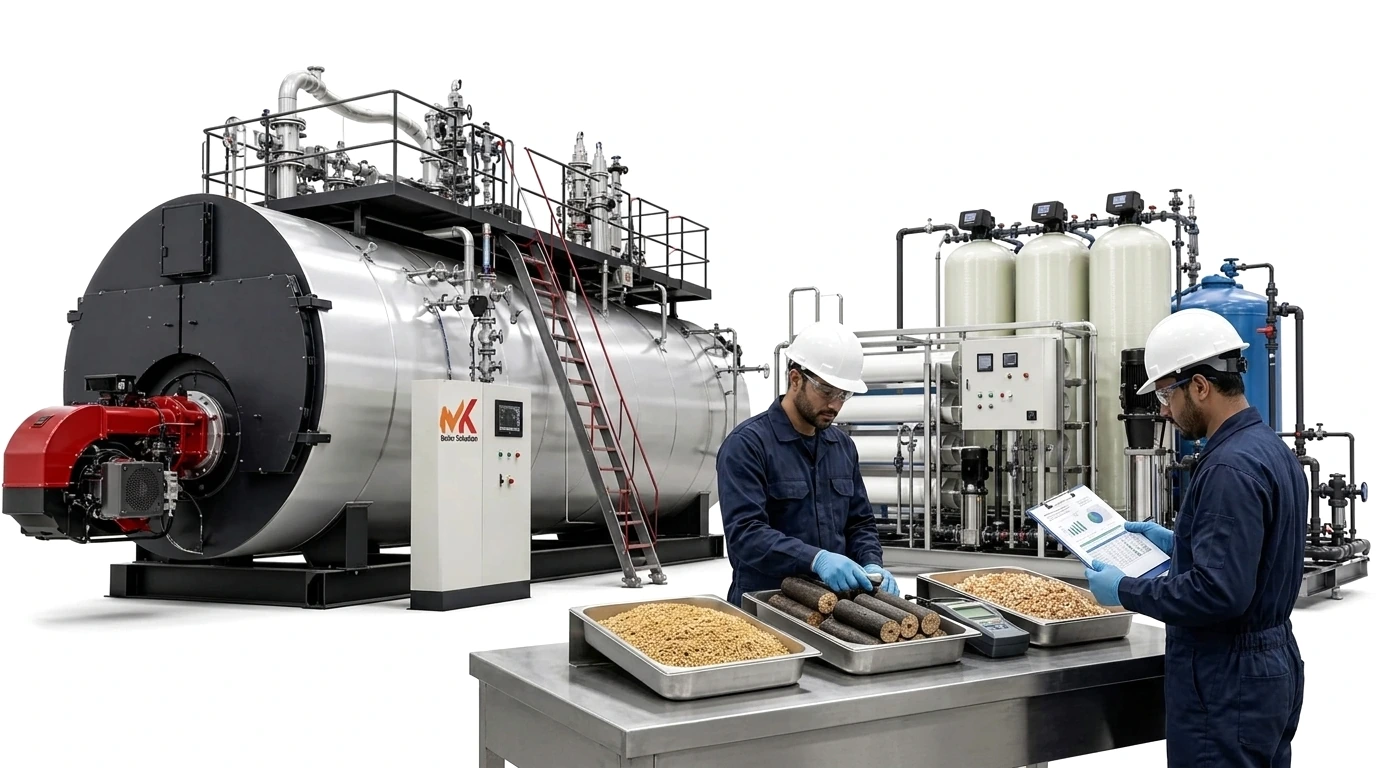
Procurement managers evaluating a gas-to-biomass conversion almost always start from price per kilogram at the gate, and that is the wrong number to start from. What decides the real cost is fuel needed per ton of steam - which depends on net calorific value (NCV), moisture content and how much of the fuel actually burns cleanly instead of clinkering, jamming a feeder or going out the stack as unburnt carbon.
The comparison that actually matters
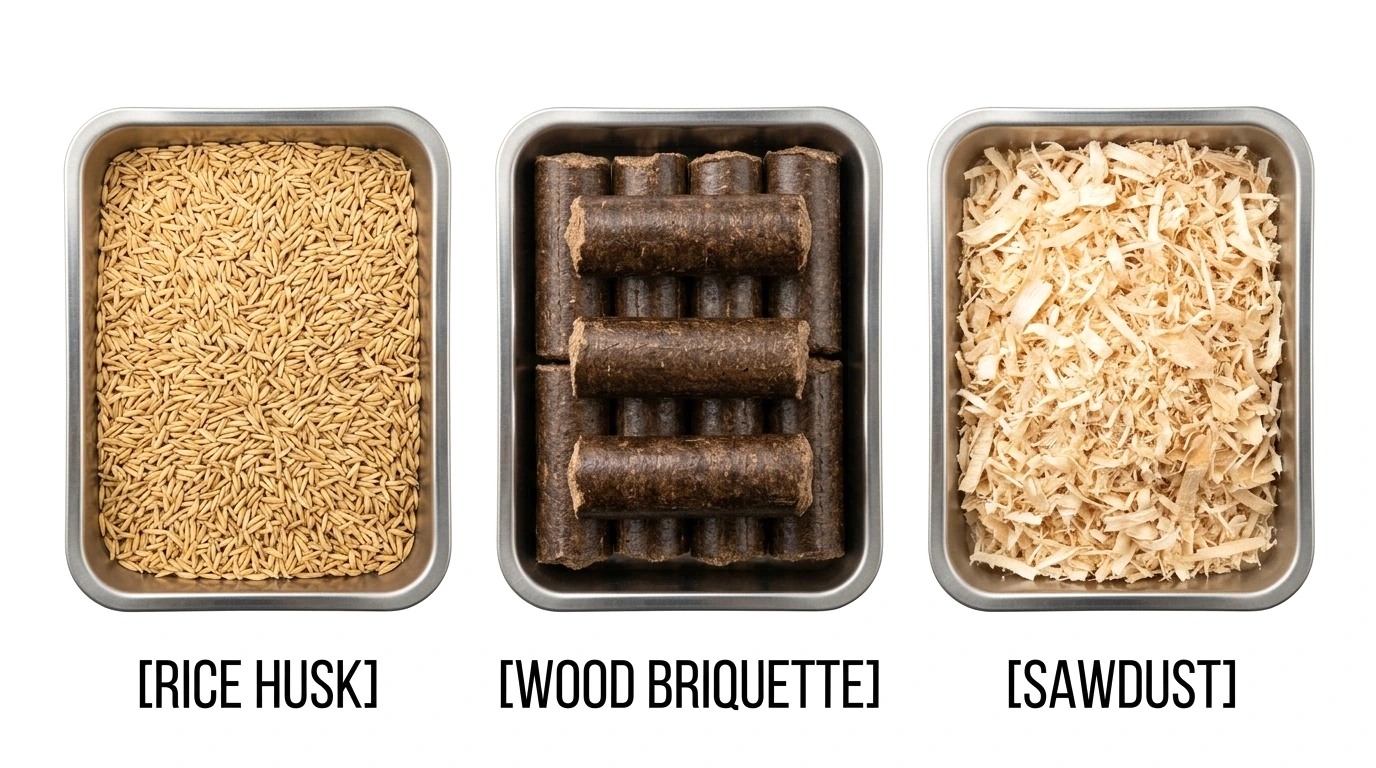
| Property | Rice husk | Wood briquette | Sawdust (loose) |
|---|---|---|---|
| Typical NCV (as received) | 2,900-3,400 kcal/kg | 3,800-4,300 kcal/kg | 3,200-3,800 kcal/kg |
| Typical moisture content | 8-12% (up to 20% post-monsoon) | 8-12% | 15-35% (highly variable) |
| Ash percentage | 18-22% | 1-3% | 0.5-2% |
| Ash character | High silica, prone to clinkering on grate | Low ash, minimal clinker risk | Low ash, but fine particulate carryover |
| Bulk density | Low - large storage footprint per ton | High - compact storage | Very low - largest storage footprint per ton delivered |
| Typical delivered price | ~BDT 5-7/kg | ~BDT 8-10/kg | ~BDT 3-5/kg (but see handling losses below) |
| Feed handling | Well suited to screw or belt feeders | Easiest to meter and store | Prone to bridging, dust loss and flashback risk (see our boiler safety protocols) |
The high silica ash content in rice husk is the property procurement teams underweight most often. It is why husk needs a grate designed for regular clinker removal, and why boilers fed husk without that provision lose efficiency gradually as ash builds a insulating layer between the fuel bed and the tube surfaces above it.
Turning the table into cost per ton of steam
At a typical 70-78 per cent grate-fired combustion efficiency, the property table above turns into a fuel-needed-per-ton-of-steam figure that tells a different story than the price-per-kilogram number alone:
| Fuel | Fuel needed per ton of steam | Delivered cost per ton of steam |
|---|---|---|
| Rice husk | ~280-310 kg | ~BDT 1,600-1,900 |
| Wood briquette | ~200-220 kg | ~BDT 1,700-2,000 |
| Sawdust (loose, well-handled) | ~230-260 kg | ~BDT 900-1,200 on paper - typically 15-25% higher once bridging losses and unburnt carryover are counted |
Sawdust looks cheapest on the delivery note and is often the most expensive in practice, because its handling losses do not show up until the boiler room measures actual steam output against fuel delivered, not fuel burned. Rice husk and briquette land close enough per ton of steam that supply reliability, not price, should usually decide between them.
Handling issues that take fuel off the floor
Each fuel fails differently, and the failure mode is usually predictable from the property table above:
- Sawdust flashback. Fine, low-moisture sawdust ignites and propagates flame far faster than husk or briquette. Fed through equipment not designed for it, flame can travel back up the feed chute into the hopper - a real fire risk, not a theoretical one. Sawdust needs a rotary airlock or equivalent flame barrier between the hopper and the combustor, which husk and briquette systems often do not include.
- Feeder clogs and bridging. Sawdust and, in humid storage, rice husk both bridge in hoppers - forming an arch that stops fuel falling onto the feeder, which then runs dry until an operator notices steam pressure dropping. Bridging is a storage and hopper-geometry problem, not a fuel quality problem, and it is fixable with the right hopper angle and a vibratory or rotary agitator.
- Silica clinkering. Rice husk ash fuses into hard, glassy clinker at typical grate temperatures because of its high silica content. Left unmanaged, clinker blocks air passage through the grate, drops combustion efficiency, and eventually requires a manual shutdown to break up and remove. A grate designed for husk needs a shaking or travelling mechanism sized specifically for this, not a generic solid-fuel grate.
Seasonal supply swings between Northern and Central Bangladesh
Fuel availability is not stable through the year, and the pattern differs by region:
- Rice husk peaks in supply just after the Boro harvest (April-May) and again after Aman (November-December), concentrated around mill towns in the north and northwest. Prices during off-season months, particularly just before Boro comes in, can run 20-30 per cent above harvest-season rates.
- Wood briquette and sawdust supply tracks sawmill and furniture-industry activity, which is comparatively steady through the year but concentrated around Gazipur and Chittagong. Monsoon months raise moisture content across the board for any fuel stored without a covered facility, which is the more common seasonal risk than an outright shortage.
- Mustard stalk and other agricultural residues are a Northern Bangladesh option worth testing locally in Bogura and Rajshahi—available cheaply after the Rabi season but with NCV and ash characteristics that vary considerably by district and need testing before committing to a supply contract.
A boiler room that depends on a single fuel and a single supplier is exposed to both of these swings at once. Most well-run boiler rooms in Bangladesh keep at least two qualified fuels and two suppliers, even if one is used the large majority of the time. (For alternative factory fuels, see our guide on burning garment fabric cutting waste (jhut)).
Before you sign a supply contract
- Test NCV and moisture on every delivery, not just the first sample - quoted figures drift with the season and with the supplier's own storage conditions.
- Confirm the feed and grate hardware on your boiler actually matches the fuel you are buying—order replacement grate bars, feeders, and spare parts if modifying your combustion chamber.
- Ensure your flue gas train meets Department of Environment (DoE) stack emission limits before switching to high-ash biomass.
- Keep a second qualified fuel and supplier in reserve for the season when your primary fuel's price or moisture moves against you.
Test before you commit
A fuel that looks cheaper on the delivery note can cost more per ton of steam once moisture, ash and handling losses are counted properly. We provide boiler repair and maintenance, boiler inspection & certification support, and put together a biomass sourcing and quality-testing checklist—contact our combustion engineering desk.
Common questions
Which biomass fuel is cheapest per ton of steam - rice husk, briquette or sawdust?
Rice husk is usually the cheapest per ton of steam delivered because of its low price per kilogram, even though its NCV is the lowest of the three. Wood briquette costs more per kilogram but burns more predictably and needs less excess air, which narrows the gap. Loose sawdust is rarely the cheapest option once handling losses and flashback risk are counted.
Why does my rice husk boiler need more fuel than the supplier's NCV figure suggests?
Quoted NCV figures usually assume 8-10 per cent moisture. Husk delivered during or just after monsoon commonly carries 15-20 per cent moisture, which lowers the effective NCV and raises the kilograms of fuel needed per ton of steam - test moisture on receipt rather than trusting the quoted figure.
Is sawdust safe to feed directly into a biomass combustor?
Only with a feed system designed for fine, low-density fuel. Loose sawdust fed through equipment sized for husk or briquette is a common cause of flashback into the fuel hopper, because fine particles ignite and propagate flame far faster than pelletised or husk fuel.
More from the blog
- MaintenanceAn annual boiler maintenance checklist for factory managersPlan daily records, periodic servicing and the annual shutdown with clear responsibilities, inspection evidence and a controlled return to service.
- Maintenance planningBoiler AMC or breakdown calls: compare the full costCompare a boiler annual maintenance contract with on-demand repairs using downtime assumptions, service scope, response commitments and spare-parts exclusions.